
Levla: Habit Tracker RPG
Turbo Labs SEProductivity
4.834.00 Reviews
- Version
- 1.0.4
- Installs
- 10.00K
- Age Rating
- Everyone
Screenshots

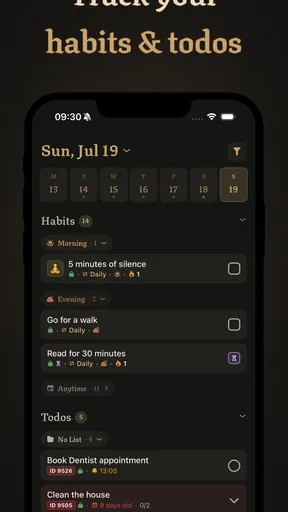
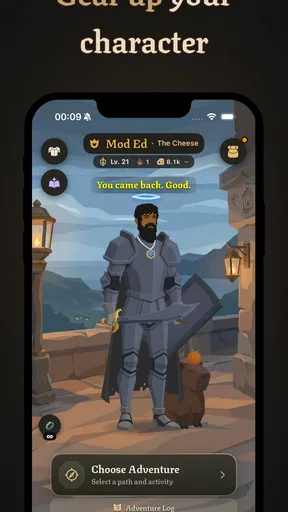
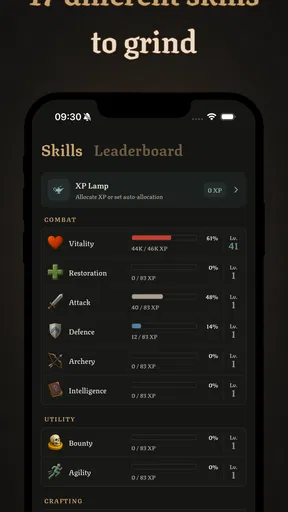
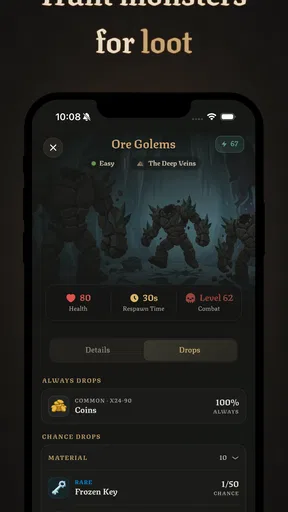
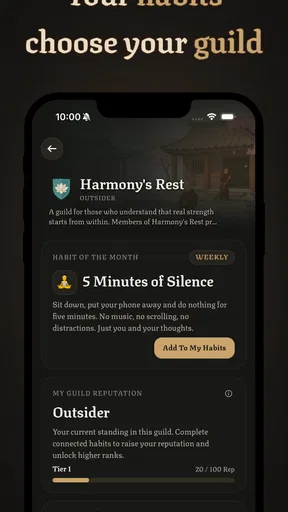
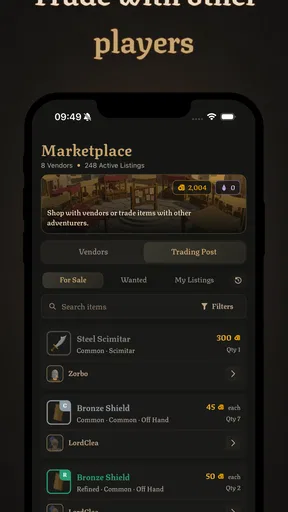
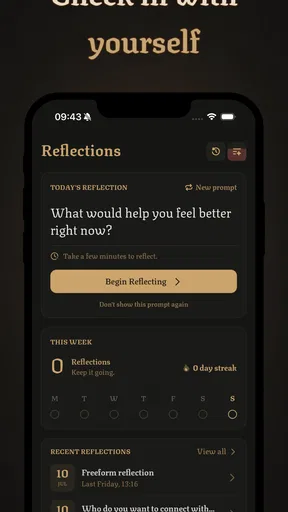
Our Review of Levla: Habit Tracker RPG
 Analysis by Appyee
I know the feeling of opening a habit tracker, carefully adding a few goals, and then abandoning it because checking boxes starts to feel like another chore. Levla: Habit Tracker RPG takes a different route. It frames everyday progress through a role-playing-game style character, so completing a useful action is meant to feel connected to visible personal progress rather than sitting in a forgotten list.
That idea makes this productivity app interesting, but the real question is practical: does the game layer reduce the effort of managing habits, or does it simply add decoration? After spending time with Levla, I see its strongest use as a gentle bridge between intention and repetition. It is especially appealing if ordinary trackers feel flat, yet you still want something focused on real-life routines instead of a full task-management system.
The app is free to start, is rated for Everyone, and comes from Turbo Labs SE. Its current version is 1.0.4, with support for Android 8.0 and later. The listing shows a 4.8 average from around 470 ratings and more than 10,000 installs, which suggests that its compact approach is already finding an audience. Optional in-app purchases range from $5.99 to $149.99 per item, so I would approach the paid elements thoughtfully rather than assuming every part of the experience is included at no cost.
Turning a vague intention into a repeatable action
The recurring problem Levla addresses is not a lack of ambition. Most people already know what they would like to improve: move more, read regularly, practice a skill, keep a room manageable, or create a calmer morning. The difficult part is converting that broad intention into something small enough to repeat on an ordinary day.
A conventional checklist is good at recording completion, but it can feel emotionally empty. A calendar can show a streak, yet a missed day may make the whole effort look broken. Levla’s RPG framing gives the action a little more meaning. Instead of treating a habit as an isolated tick, it presents the process as progress for a character connected to your own life.
That distinction matters when motivation is inconsistent. I would not expect the app to create discipline by itself, and it cannot remove the effort required to do the habit. What it can do is make the feedback loop more immediate. You complete something useful, return to the app, and receive a sense that the character is advancing because you acted.
The practical benefit is reduced mental negotiation. A good habit tool should help me decide what to do before I am tired or distracted. Levla works best when I use it to define a small number of repeatable actions, rather than trying to represent my entire life inside a game interface.
Setting up a useful starting point
My advice is to begin with habits that have a clear finish line. “Work on my health” is too broad to be useful, while “take a short walk” gives me an action I can recognize as complete. The same principle applies to studying, creative work, household routines, and personal projects. The more obvious the completion point, the less time I spend arguing with myself about whether I really made progress.
I would also avoid building an impressive collection on the first day. The temptation with an RPG-style tracker is to create a whole character arc immediately: exercise, reading, sleep, learning, tidying, planning, and several personal goals at once. That can turn a motivating system into a daily audit. A smaller starting set gives the app a fair chance to prove whether its feedback helps you.
One useful setup technique is to separate habits by energy level. A routine that is easy on a normal day may be unrealistic when work runs late or sleep is poor. If every action is equally demanding, missing one can make the entire system feel punitive. I prefer defining a reliable baseline first, then treating more ambitious behavior as an optional improvement rather than the minimum standard.
This is also where Levla differs from a basic notes app. A note can hold intentions, but it rarely gives them a consistent rhythm. The RPG presentation encourages me to think in terms of repeated actions and gradual development. That is valuable, provided I keep the structure honest and do not use it to disguise goals that are too large.
What a normal day feels like
Imagine a weekday morning when I am rushing to get ready. I do not need a complicated planning session; I need a quick reminder of the few behaviors that matter. If the app lets me see those actions without making me navigate through a large productivity system, it can save the small amount of attention that usually disappears before breakfast.
Later, after finishing a planned activity, the useful moment is the check-in. The character-based feedback gives the action a little more weight than a plain mark on a list. I can see why that would appeal to someone who enjoys games but does not want a competitive leaderboard or a demanding project-management workflow.
Another realistic scenario is an evening reset. I might have completed one important habit but missed another because the day changed unexpectedly. A helpful routine is to record what happened without trying to “make up” for it with an unrealistic burst of activity. Levla is better used as a reflection tool than as a reason to punish myself for having a complicated day.
For a student, the app could make repeated study behavior feel more tangible. The key is to track the behavior that supports learning, such as sitting down for a focused session, rather than pretending that checking an item equals understanding a subject. For someone working from home, it could support boundaries around breaks or end-of-day routines. For a person trying to keep a creative practice alive, the character progression may make small sessions feel worthwhile even when there is no finished project to show.
Parents and younger users may also find the game-like idea approachable because the content rating is Everyone. Still, I would treat it as a personal motivation aid, not as a substitute for guidance, health advice, or a carefully designed support plan. A playful interface can encourage consistency, but it should not be used to judge a child’s worth or turn ordinary responsibilities into a source of pressure.
Where it saves time and where it does not
Levla can remove friction at the point where many habit systems fail: the return visit. If opening the app feels more inviting than opening a spreadsheet, I am more likely to record progress while the action is still fresh. The character concept also gives the review moment a purpose, which is more engaging than maintaining a bare archive of completed dates.
It may also reduce the need to combine several unrelated tools. Someone who only wants a lightweight way to connect routines with a sense of progression does not necessarily need a calendar, project board, journal, and separate motivation app. Levla’s narrow focus can be an advantage because there are fewer decisions to make.
That simplicity has a boundary. If I need detailed project dependencies, shared workspaces, long notes, advanced scheduling, or a complete calendar view, a conventional productivity platform will probably be better. Levla is not the right replacement for a task manager when the main challenge is coordinating many moving parts. Its value is strongest when the problem is repeating a few personal behaviors, not managing a complex operation.
There is another trade-off in the game layer. It can make progress enjoyable, but some users may find the role-playing presentation less direct than a plain checklist. If I want the fastest possible way to mark a recurring task and leave, a minimal tracker may feel cleaner. Levla earns its place when the extra sense of development helps me return consistently.
Using the RPG idea without letting it take over
The most effective way to use Levla is to make the fictional progress serve a real-world purpose. I would connect each habit to a reason that matters outside the app. Reading is not valuable merely because a character advances; it may help me learn something, relax before bed, or make time for a long-term interest. Exercise is not just a reward event; it supports energy and health.
This approach prevents a common mistake: optimizing the tracker instead of the life it is supposed to support. If I start choosing only the easiest actions because they produce satisfying progress, the character may advance while my meaningful goals remain untouched. A good rule is to ask whether the habit would still be worth doing if the game-like feedback disappeared.
I also recommend reviewing the list when a habit repeatedly feels impossible. The answer may not be “try harder.” The action could be too vague, scheduled at the wrong time, or dependent on conditions I cannot control. Breaking it down into a smaller behavior is more useful than adding more reminders or blaming myself for a missed entry.
For people who enjoy games, this is a concrete advantage over a standard tracker: the emotional language of progression may make repetition feel less like administration. For people who dislike gamification, the same feature may become the main obstacle. The app should be judged by whether its presentation helps you act, not by whether the concept sounds clever.
Cost, platform, and the decision to continue
Levla is available free of charge, which makes it easy to test the central idea before committing money. Optional purchases are listed from $5.99 to $149.99 per item. That wide range is worth keeping in mind, especially for users who prefer a completely predictable productivity budget. I would begin with the free experience and only consider spending if the app becomes part of a routine I genuinely maintain.
The Android requirement is modest, with compatibility beginning at version 8.0. That should make the app accessible on many older devices, although the experience will naturally depend on the phone itself. The listed release date is June 24, 2026, so I would view the product as a relatively early-stage offering and pay attention to how comfortably its workflow fits my needs over time.
The developer, Turbo Labs SE, has positioned the product clearly around habits and an RPG-style identity rather than trying to be every kind of productivity software. That focus is welcome. I would rather have a smaller tool with a recognizable purpose than an overloaded app that forces me through features I never use.
Who should use it, and who should choose something else
I would recommend Levla to someone who has tried plain habit lists and found them dull, someone who enjoys light game mechanics, or someone who wants a friendly daily prompt without adopting a full planning system. It also suits users who are motivated by visible progression and can keep their goals small enough to repeat.
I would be more cautious if missed days tend to trigger guilt, if you need detailed records for medical or professional reasons, or if your work depends on complex deadlines and collaboration. In those cases, a specialized health journal, calendar, or project manager may offer more appropriate structure. The app should support your routine, not become another standard you feel forced to satisfy.
My final view is that Levla: Habit Tracker RPG has a sensible answer to a familiar productivity problem: it makes the act of returning to a habit system feel more meaningful than checking an empty box. Its strongest feature is not the fantasy framing by itself, but the way that framing can connect a small real-world action with a visible sense of development.
I would start with a few concrete habits, use the app consistently for a while, and judge it by one question: do I spend less time planning and more time doing? If the RPG feedback encourages that change, Levla is a worthwhile free tool to try. If I need deep scheduling, shared task management, or a completely stripped-down checklist, I would choose a different category of app instead. For the right user, though, it offers a pleasant middle ground between a lifeless tracker and an oversized productivity suite.
Verdict
Strengths of Levla: Habit Tracker RPG
- Turns daily habits into engaging RPG-style quests.
- Simple progress tracking makes routines easy to review.
- Reward system can make small goals feel more motivating.
- Flexible habit setup supports different personal routines.
- Clean visual design is approachable for new users.
Limitations of Levla: Habit Tracker RPG
- RPG elements may feel too basic for dedicated gamers.
- Some features may require patience to unlock or understand.
- Manual habit updates can become repetitive over time.
- Limited social features may disappoint users seeking accountability.
- Notifications can feel intrusive if configured too frequently.
Similar Picks in This Category
View All
Google Calendar
Google LLC4.6

Google Drive
Google LLC4.3

Google Assistant
Google LLC3.9

Microsoft OneDrive
Microsoft Corporation4.6

Samsung Calendar
Samsung Electronics Co., Ltd.4.1

Microsoft OneNote: Save Notes
Microsoft Corporation4.6
Frequently Asked Questions
What is Levla: Habit Tracker RPG, and how does it work?
Levla: Habit Tracker RPG combines habit tracking with role-playing game mechanics. You create daily or recurring habits, mark them as completed, and use your progress to develop an in-game character or adventure. Instead of relying only on reminders and checklists, the app gives your routines a sense of progression, helping turn personal goals such as exercise, studying, reading, or better sleep into manageable quests.
Is Levla: Habit Tracker RPG suitable for beginners who have never used a habit tracker?
Yes. Levla is designed to make habit building approachable, even if you are starting from scratch. You can begin with a small number of simple habits and gradually adjust their frequency or difficulty as you learn what works for you. The RPG-style progression adds motivation, but you do not need to understand traditional role-playing games to use the tracker or benefit from its daily routine features.
Can I customize habits and track different types of personal goals?
Levla is most useful when your habits reflect your real priorities. You can generally organize routines around areas such as health, productivity, learning, self-care, and fitness, then choose schedules that match your lifestyle. Before downloading, users should check the current version’s customization options, including available categories, repeat settings, reminders, rewards, and whether the app supports the exact tracking style they prefer.
Does Levla: Habit Tracker RPG require an internet connection or an account?
The basic habit-tracking experience may work on your device without a constant internet connection, but some features can depend on the app’s current design. Synchronization, cloud backups, account-based progress, advertisements, purchases, or online services may require connectivity. Because these requirements can change between Android and iOS versions, review the store listing and privacy details before relying on Levla for important long-term records.
Is Levla: Habit Tracker RPG free to download, and are there in-app purchases?
Levla may be available as a free download, although the exact pricing model can vary by platform, region, and version. Some features may be supported by advertisements or offered through optional in-app purchases or a subscription. Check the Google Play or App Store listing for the current details before installing, especially if you want access to premium customization, additional game content, advanced statistics, or an ad-free experience.
